How It Works
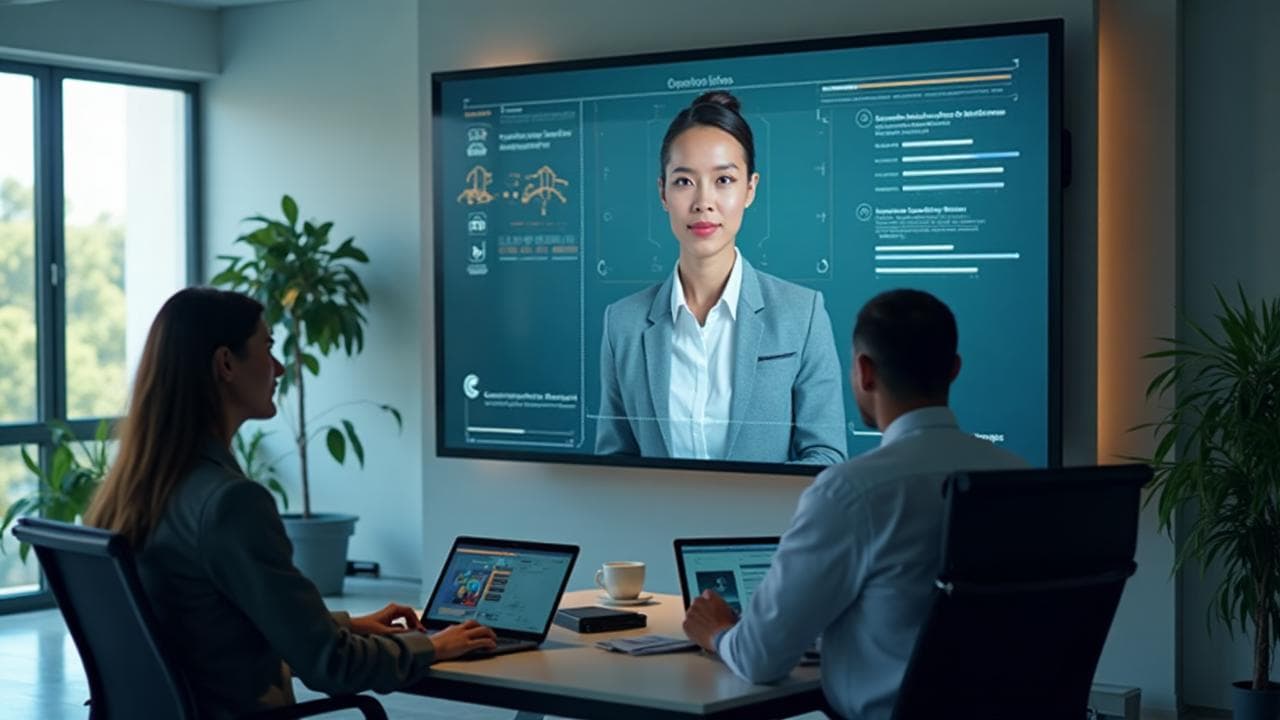
Employers configure a set of questions in their video interview platform, assign time limits for each response (typically 60 seconds to 3 minutes), and issue candidates a link. Candidates access the questions, record their answers at their own convenience, and submit the recording. Employers then review submissions individually, scoring each against pre-defined criteria.
Most platforms allow a practice question before the real interview begins, so candidates can test their audio and video setup without it counting against their performance.
Why Employers Use One-Way Video Interviews
The primary driver is efficiency. A single recruiter can review 50 one-way video responses in the time it takes to conduct 5 phone screens. There is no scheduling overhead, no cancellations, and no interviewer availability acting as a bottleneck on the process.
Beyond efficiency, one-way video interviews surface candidate communication skills earlier in the process without requiring a live conversation. For roles where communication is a core competency, this is genuinely useful signal. Candidates also tend to present better than on rushed phone screens: they can choose a quiet environment, prepare, and record when they feel ready.
Setting One Up Effectively
The quality of a one-way video interview depends almost entirely on the quality of the questions. Vague, generic questions produce vague, generic responses that are difficult to evaluate consistently. Effective one-way interviews use structured, role-specific questions tied to the competencies the role requires.
Practical guidelines: limit to 3–5 questions (longer processes see higher candidate drop-off); give candidates a clear sense of what you are evaluating; define your scoring criteria before you review, not after; provide at least one practice question so technical issues do not unfairly affect performance.
Limitations and Considerations
One-way video interviews are not appropriate as a standalone assessment for senior or complex roles. They remove conversational follow-up — the ability to probe an interesting answer or clarify an ambiguous response — which limits their diagnostic value for roles requiring nuanced judgement.
They also carry candidate experience risks if poorly implemented. A low-effort, poorly-configured video screen reflects badly on the employer brand. Candidates applying for competitive roles are increasingly selective about the employers they engage with.
EU AI Act Considerations
When AI is used to evaluate one-way video responses, the process falls within the scope of the EU AI Act's high-risk AI provisions for employment decisions, which become enforceable in December 2027. Employers using AI-scored video interviews must ensure candidates are informed that AI is being used, that candidates can request human review of AI-generated assessments, that audit trails are maintained for each scoring decision, and that analysis is limited to content (transcripts, spoken words) rather than protected characteristics such as facial expressions or vocal tone.
How Palantrix approaches one-way video interviews
Palantrix's Quick Response and Structured Interview formats are both one-way video interview formats. All candidate responses are submitted regardless of AI score — in line with EU AI Act requirements — and evaluation is transcript-based. Each response is benchmarked against your Team DNA Profile, which means candidates are scored against the specific behaviours and traits your team identified as predictive for the role, rather than a generic rubric.
See how AI Video Interviews work →Frequently Asked Questions
What is the difference between a one-way and a live video interview?
A one-way video interview is pre-recorded — the candidate records responses to pre-set questions without an interviewer present. A live video interview involves both parties connecting in real time, enabling conversation and follow-up. One-way interviews are typically used for first-stage screening; live interviews for later stages.
Do candidates need special equipment?
Candidates generally need a device with a camera and microphone (a modern smartphone, tablet, or laptop is sufficient), a stable internet connection, and a reasonably quiet environment. Most platforms include a technical check before the interview begins.
How long should a one-way video interview take?
Most effective one-way interviews are 3–5 questions, with response times of 90 seconds to 3 minutes each. The full process should take candidates no longer than 15–20 minutes. Longer assessments see significantly higher drop-off rates.
Is it fair to use one-way video interviews?
One-way video interviews are fair when implemented with consistent questions, pre-defined scoring criteria, and equal time allocations for all candidates. The fairness risk arises when evaluation is informal and subjective. When AI is used in evaluation, EU AI Act compliance — audit trails, transparency, no protected characteristic analysis — is required.
What happens to recordings after the hiring process?
Under GDPR, candidate data including video recordings must be retained only for as long as necessary and in line with your stated data retention policy. Candidates should be informed of retention periods at the point of application. Most platforms allow you to configure automatic deletion after a set period.