What an Interview Scorecard Contains
A well-designed scorecard includes: the list of competencies or traits being assessed (typically 3–6); a question or set of questions for each competency; a rating scale (typically 1–5) with behavioural descriptors at each level; space for interviewer notes on specific evidence; and a summary score or hire/no hire recommendation.
The rating descriptors are the most important element. '1 = poor, 5 = excellent' is not a scorecard — it is a subjective rating. A genuine scorecard describes what a 5 looks like versus a 3 for each specific competency: what kind of specific, high-stakes example, personal accountability, and concrete outcome separates the two.
Why Scorecards Matter
Without a scorecard, the interview process produces impressions, not evidence. Two interviewers who meet the same candidate often walk away with different assessments because they were unconsciously evaluating different things. A scorecard creates a shared standard: both interviewers are evaluating the same competencies, against the same descriptions of what good looks like.
This matters most when multiple people are involved in hiring decisions. Panel debrief conversations without scorecards are dominated by the most confident speaker or the most senior person. Scorecards allow for structured debrief: 'On communication, you gave a 4 and I gave a 2 — what did you see that I didn't?'
Scorecards and Legal Defensibility
An interview scorecard creates a documented record of why a hiring decision was made. If a rejected candidate challenges the decision — alleging discrimination or unfair process — the scorecard provides contemporaneous evidence that the decision was based on defined, job-relevant criteria assessed consistently across all candidates.
Under the EU AI Act, AI-assisted hiring processes require auditability. The scorecard — or its automated equivalent — is the mechanism through which this audit trail is created and maintained.
Common Scorecard Mistakes
The most common mistake is completing the scorecard retrospectively — after the post-interview conversation, not during or immediately after the interview. Memory of candidate responses decays rapidly, and discussion with other interviewers introduces anchoring effects that undermine independent evaluation.
A second mistake is treating the scorecard as a formality — completing it quickly to satisfy a process requirement rather than genuinely engaging with the evidence. A scorecard filled with identical high scores and no substantive notes is not useful evidence for a hiring decision.
Digital and AI-Assisted Scorecards
Modern hiring platforms increasingly automate aspects of the scoring process — AI analysis of video responses can generate an initial score that interviewers review and adjust. This is appropriate when the AI scoring logic is transparent and the human reviewer has genuine ability to override.
It is not appropriate when the AI score is treated as definitive without human review, or when the scoring criteria are opaque to the hiring team.
How Palantrix replaces the manual scorecard
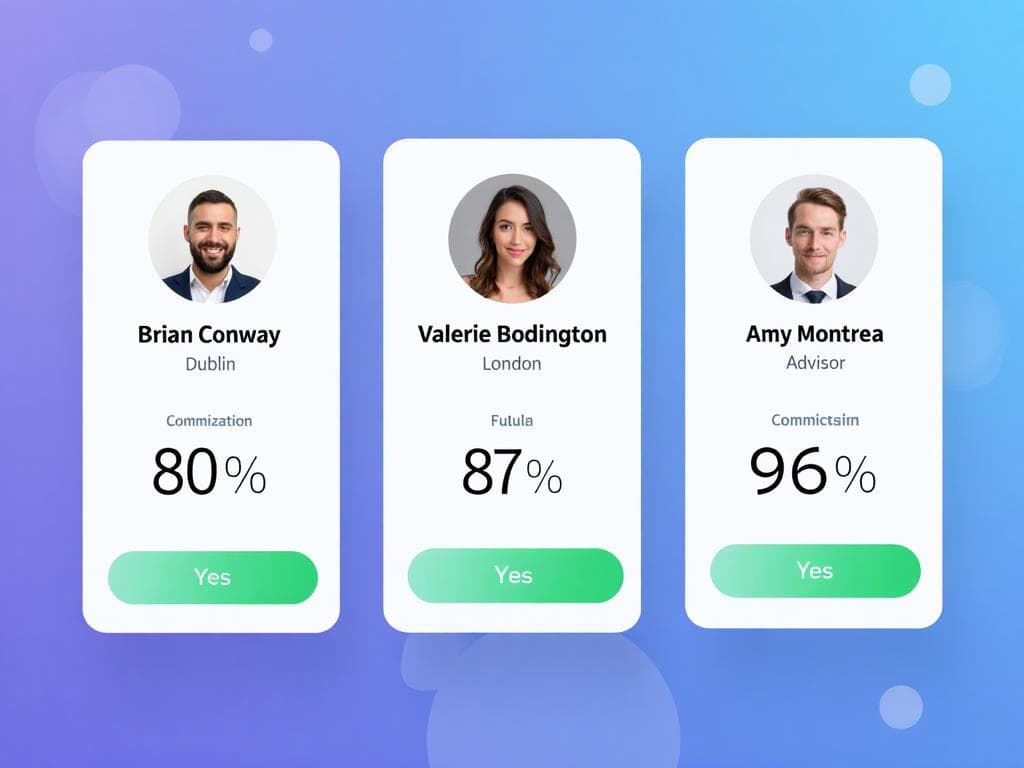
The Trait Alignment Score in Palantrix is the scorecard made systematic. Instead of interviewers filling out a rubric manually after each interview, AI scores every response against the traits in your Team DNA Profile — consistently, at scale, with a full audit trail. Hiring managers review and can annotate every score. The full record is retained for EU AI Act compliance and any subsequent review.
See how Pipeline Management works →Frequently Asked Questions
When should an interview scorecard be completed?
During or immediately after the interview — before any discussion with other interviewers. Memory of specific responses degrades quickly, and discussing impressions with colleagues before scoring introduces anchoring and social influence effects that undermine the purpose of the scorecard.
Should all interviewers in a panel use the same scorecard?
Yes. A shared scorecard ensures that all interviewers are evaluating the same competencies. In a structured panel interview, interviewers may divide responsibility for different competencies — in which case the shared scorecard makes that division explicit and prevents duplication or gaps.
How is an interview scorecard different from an ATS rating?
Most ATS systems allow a simple star rating or hire/no-hire flag. An interview scorecard is more granular: it breaks the evaluation down by competency, with behavioural descriptors and space for evidence. The ATS rating is an output; the scorecard is the documented reasoning behind it.
Do interview scorecards eliminate bias in hiring?
They reduce certain sources of bias — specifically, the influence of irrelevant factors on overall impressions when no structured evaluation framework exists. They do not eliminate bias entirely, because the rubric itself must be designed carefully to avoid embedding criteria that correlate with protected characteristics.
Are interview scorecards required under the EU AI Act?
Where AI is used in employment decisions, the EU AI Act (effective December 2027) requires that decisions be documented, auditable, and explainable. A scorecard — or its AI-generated equivalent — is the mechanism for meeting this requirement. Employers using AI-assisted hiring without documented scoring rationale will face compliance risk.