What AI Video Interviews Actually Do
The term 'AI video interview' covers a range of different technical approaches, and the distinction matters for both quality and compliance. Transcript-based analysis — the most defensible approach — converts spoken responses to text and evaluates the content: the quality of examples provided, the clarity of reasoning, the relevance of experience to the competency being assessed.
Multimodal analysis additionally analyses facial expressions, vocal tone, eye contact, and speech patterns. This approach is scientifically contested, carries significant legal risk under the EU AI Act's restrictions on emotion recognition in professional contexts, and has been criticised by applied psychologists and regulators. Employers should understand precisely which approach their platform uses.
How the Scoring Works
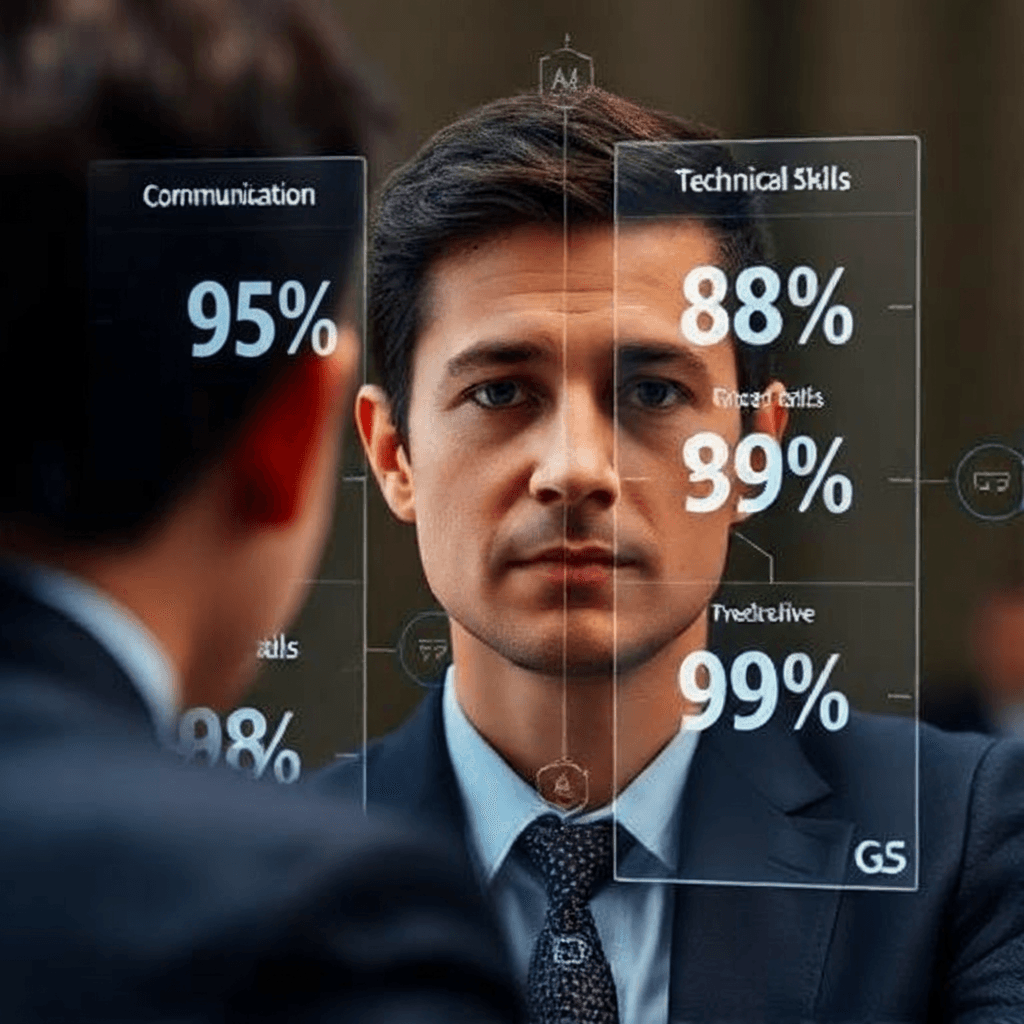
In a responsibly designed AI video interview system, the AI does not make the hire/no-hire decision. It scores responses against a pre-defined framework — the traits, competencies, or behavioural indicators specified by the employer — and presents those scores to a human reviewer who makes the final decision. The AI is a screening and prioritisation tool, not a replacement for human judgement.
Good implementations include: a documented scoring model, the ability for reviewers to override scores, full transcripts of every response, and the ability to audit any scoring decision.
Benefits for Hiring at Scale
For organisations processing large volumes of applications, AI video interviews provide a consistent, scalable first screen. Every candidate answers the same questions and is scored against the same criteria — regardless of the hour of day, the reviewer's state, or the volume of applications. Manual video review of 200 candidates is impractical; AI-assisted review makes it feasible.
This consistency is genuinely valuable from a fairness perspective: every candidate is evaluated against the same standard, with the same criteria applied in the same way.
What AI Video Interviews Cannot Do
AI is not well-suited to assessing interpersonal qualities that only emerge in real conversation: the ability to read the room, build rapport under pressure, or respond to unexpected curveballs with composure. These require human interaction. AI video interviews should be one stage in a multi-stage process, not the whole process.
They are also not appropriate for all candidate populations. Candidates with speech impairments, candidates whose first language is not the interview language, or candidates without access to reliable technology may be disadvantaged. Equitable implementation requires attention to these factors.
EU AI Act Compliance
Under the EU AI Act, AI systems used in employment decisions are classified as high-risk (enforceable from December 2027). Employers using AI video interviews must inform candidates that AI is being used in evaluation; maintain full audit trails of scoring decisions; ensure candidates can request human review; avoid analysis of protected characteristics (emotion, facial expression, vocal affect); and conduct conformity assessments with maintained technical documentation.
How Palantrix approaches AI video interviews
Palantrix's AI analysis is transcript-based — scoring what candidates say, not how they look or sound. Every response is scored against your Team DNA Profile, creating a Trait Alignment Score that reflects your specific role requirements. All responses are submitted regardless of score. Full transcripts, scores, and audit trails are retained. The platform is built for EU AI Act compliance ahead of the December 2027 enforcement date.
See AI Video Interviews in action →Frequently Asked Questions
Is AI video interview analysis reliable?
Transcript-based AI analysis — scoring the content of responses against defined competency criteria — has reasonable reliability and is methodologically similar to what trained human raters do. Multimodal analysis (facial expressions, vocal tone) has significantly weaker evidence and greater legal risk. The reliability of any AI scoring system depends on the quality of the criteria it is scoring against.
Can candidates tell if AI is being used to evaluate their interview?
Under the EU AI Act, candidates must be informed when AI is being used in an employment decision. Platforms that comply with this requirement notify candidates explicitly. Employers using non-compliant platforms risk regulatory and reputational consequences after December 2027.
What data does AI analysis use from a video interview?
Responsible implementations use transcript data — the text of what the candidate said. Some platforms additionally analyse vocal tone, pace, and facial expressions. The latter approaches are legally and scientifically contested and should be treated with caution.
Can AI video interviews be used alongside human review?
Yes — and this is best practice. AI provides a scored shortlist; human reviewers assess the scores, review selected recordings or transcripts, and make final decisions. The AI is a time-saving prioritisation tool; the human is the decision-maker.
Are AI video interviews suitable for all industries?
AI video interviews are most commonly used for high-volume recruitment in professional, commercial, graduate, and customer-facing roles. They are less appropriate for roles requiring significant interpersonal assessment, highly specialised technical evaluation, or contexts where candidate access to appropriate technology cannot be assumed.